
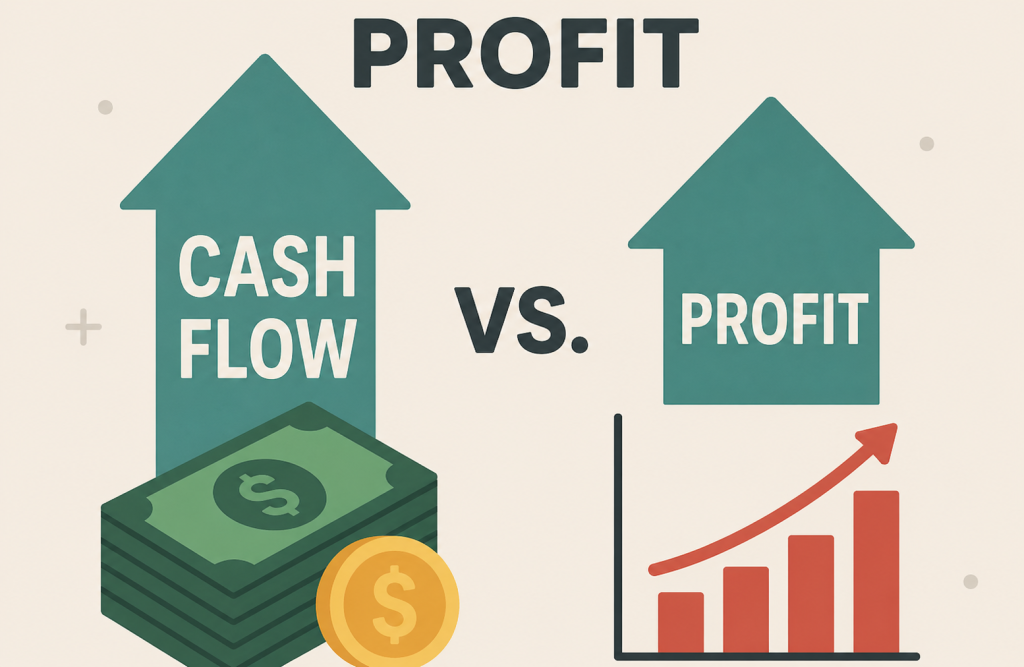
Many business owners assume that if their business is profitable, it should also feel financially stable. However, it’s very common to see businesses reporting a profit on paper while still experiencing cash shortages, stress, or difficulty covering expenses.
Understanding the difference between cash flow and profit is essential for making informed financial decisions and maintaining long-term stability.
What Is Profit?
Profit is the amount remaining after your business expenses are subtracted from your revenue.
In simple terms:
- Revenue = money earned
- Expenses = money spent
- Profit = what’s left over
Profit is typically reflected on your Profit and Loss Statement (P&L) and is an important measure of overall performance.
However, profit does not always represent how much cash you actually have available.
What Is Cash Flow?
Cash flow refers to the actual movement of money in and out of your business.
It answers a very practical question:
Do you have enough cash available right now to pay your expenses?
Cash flow includes:
- Customer payments received
- Bills paid
- Loan payments
- Payroll
- Operating expenses
Even if your business is profitable, poor cash flow management can create financial pressure.
Why Profit and Cash Flow Don’t Always Align
There are several reasons why a business can show a profit but still struggle financially:
1. Delayed Customer Payments
You may have recorded revenue, but the cash has not been received yet.
2. Upfront Expenses
You may pay for inventory, supplies, or services before generating revenue from them.
3. Debt Payments
Loan payments reduce your available cash but are not always reflected the same way in profit calculations.
4. Rapid Growth
Growing businesses often reinvest heavily, which can reduce available cash even when profits increase.
A Practical Example
A business completes $50,000 in work in a month and records it as revenue. After expenses, the business shows a $10,000 profit.
However:
- Only $20,000 has been collected from clients
- $15,000 has already been spent on expenses
- Additional bills are due
Even though the business is profitable, the available cash may not be enough to comfortably operate.
Why This Matters for Business Owners
When business decisions are based only on profit, it can lead to:
- Unexpected cash shortages
- Difficulty covering payroll or expenses
- Increased financial stress
- Limited ability to grow sustainably
Understanding cash flow allows you to:
- Plan ahead
- Maintain stability
- Make more confident financial decisions
From a CPA Perspective
From a CPA standpoint, both profit and cash flow should be reviewed regularly—not just at tax time.
A structured approach to bookkeeping and financial reporting helps identify:
- When cash flow may become tight
- Whether pricing supports sustainability
- If expenses are aligned with revenue timing
This level of clarity allows business owners to operate proactively rather than reactively.
Practical Steps to Improve Cash Flow Awareness
- Review your financial reports monthly
- Track when income is actually received, not just earned
- Monitor upcoming expenses and obligations
- Maintain organized and up-to-date bookkeeping
Even small adjustments in how you monitor your finances can make a significant difference.
Conclusion
Profit is an important indicator of business performance, but it does not tell the full story.
Cash flow reflects your business’s ability to operate day-to-day.
Understanding both allows you to build a business that is not only profitable, but also stable and sustainable.
If you would like a clearer understanding of your business finances, consider speaking with a licensed CPA.
Edith Alvarado, CPA. E.E. Accounting Solutions, LLC
Schedule a consultation to review your financial position and reporting structure.